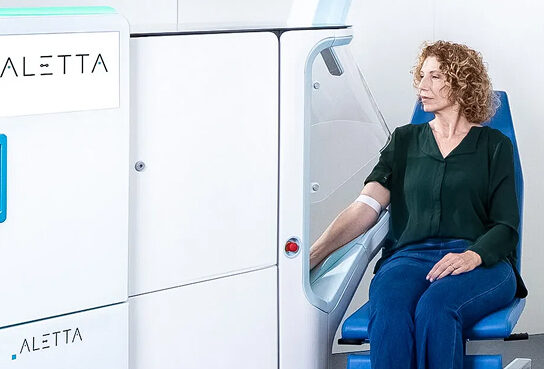
Aletta® ARPD® supports the phlebotomist
Aletta® ARPD® is designed to work alongside phlebotomy teams, performing routine blood draws, so phlebotomists can focus on patients who need extra time or care.
Aletta® operates next to manual draws, which improves efficiency without replacing the human touch that only you can provide.
Aletta® supports you with routine blood draws
By combining near-infrared, ultrasound and Doppler ultrasound, Aletta® can draw blood from a wide range of patients. It performs routine blood draws, so you can focus on patients who need extra attention.
More time for care, less time on routine tasks
Aletta® takes over routine blood draws, helping make your day more manageable and giving you and your team more time to focus on patient care where it's needed most.
New roles, new opportunities
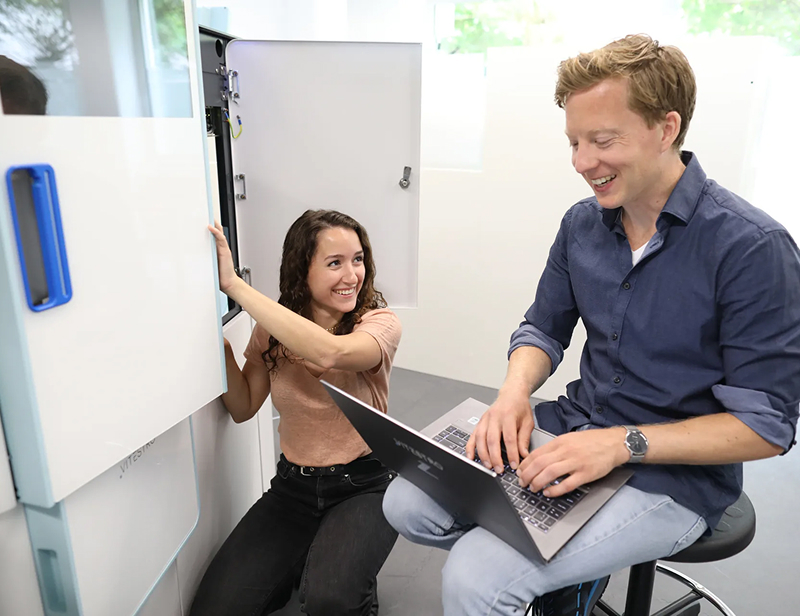
As hospitals adopt Aletta®, new roles such as the device supervisor are emerging. This offers a chance to develop new skills and take on additional responsibility in your department
How does Aletta® ARPD® work?
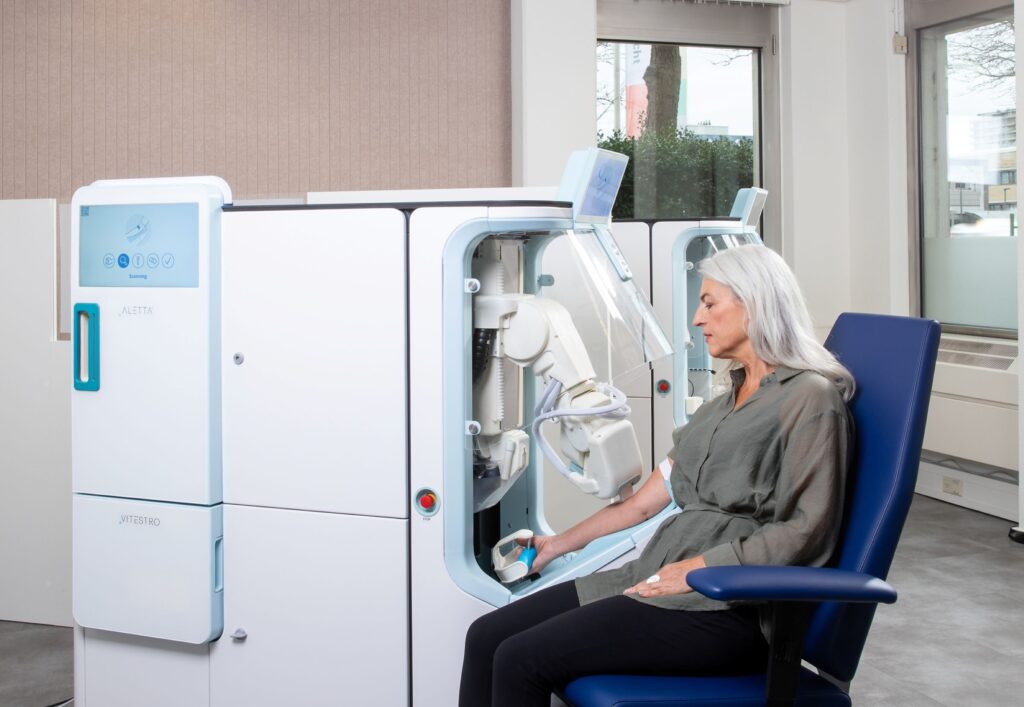
Aletta® works as part of the phlebotomy team, operating side by side with manual collection. Patients can use the device independently, while a trained phlebotomist remains nearby to provide support. One trained phlebotomist, called a supervisor, can oversee up to three Aletta® devices, assist patients when needed, manage supplies, and ensures everything runs smoothly.
Aletta® guides each patient step by step, from positioning their arm to applying a bandage. It uses near-infrared light and ultrasound to locate the optimal vein across all skin tones and body types. The device is useful for patients with difficult-to-find veins and can accurately distinguish between veins and arteries. By applying gentle pressure before the venipuncture, Aletta® helps stabilize the vein and minimize rolling veins.
Once a suitable vein is located, Aletta® performs the venipuncture, fills and inverts the tubes, and applies a bandage. If no suitable vein is identified, no automated venipuncture is performed. Blood samples remain in the device until they are collected by the supervisor for lab analysis.
Aletta® is not designed to replace all phlebotomists. Instead, it works alongside you, performing routine blood draws, easing workload, and ensuring consistent quality. This allows you to dedicate more time to patients who need extra care or a more personal approach.
Proven results for patients and staff
Work smarter with Aletta®
Aletta® is designed to help departments run more efficiently by taking over routine blood draws and reducing bottlenecks in busy departments. This eases workload pressure, and ensures that patients move through the process more quickly.
One trained phlebotomist can manage up to three Aletta® devices, ensuring smooth operations, and assisting patients if needed. This model is designed to allow for a higher daily volume of blood draws without increasing staff demand.
With Aletta®, phlebotomy teams can focus on patients who need extra care or attention, while maintaining quality throughout the department.
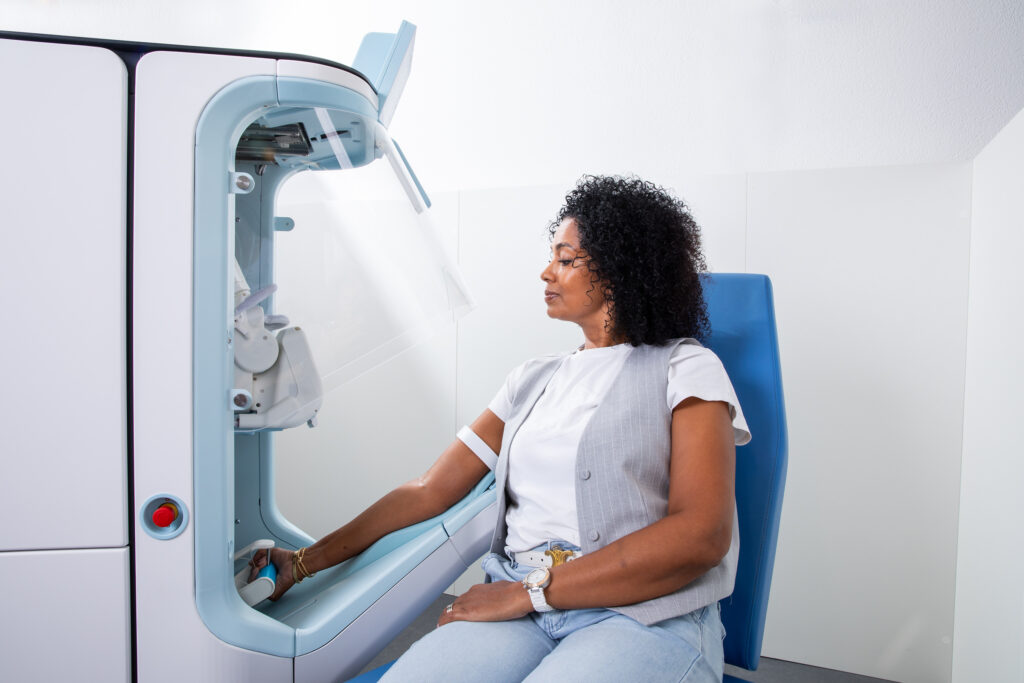
Aletta® can draw blood from a wide range of patients
Aletta® combines near-infrared and ultrasound to identify the optimal vein for venipuncture, enabling successful blood collection from nearly all patients. The device has achieved a 94.5%* first attempt success rate in patients in whom a suitable vein was identified, and is suitable for patients aged 22 and older.
Easy to train, simple to use
Aletta® is designed to fit seamlessly into your clinical practice. Phlebotomist pursuing the supervisor role will receive hands-on training from the Vitestro team to feel confident to work with the device after just a few sessions.
Let's get in touch
Do you have questions or want to learn more about Aletta®? Our team is ready to help you explore how Aletta can support your laboratory and improve patient care.
¹ Giesen, L.F.P., Roest, J.A., et al. Performance, Safety, and Patient Experience of an Autonomous Robotic Phlebotomy Device: A Multicenter Trial. Clinical Chemistry (2026)
Note: this study evaluated an investigational version of the device. The results have not been reviewed by regulatory authorities.